Getting Cheated On Was the Best Thing to Ever Happen to Me
How I manifested my own heartbreak and it changed me forever

For most of my life, I avoided rejection as if it were contagious — something that might mark me forever if I let it touch me. I applied to colleges I knew I’d get into. I dated people who couldn’t really hurt me. Safety was my strategy, which ultimately meant settling for less than I dreamed of.
After being assaulted in my first serious teenage relationship and heartbroken by the boy who helped me pick up those pieces, I made an unconscious vow: never again. With men, I played it safe — the soft guitar players, the teacher’s pets, the boys so smitten with me that I knew they couldn’t devastate me. That protection shield worked. But it also meant my relationships always carried a quiet undertone of compromise. I wasn’t risking. I wasn’t soaring. I was simply getting by.
When I came out, that unconscious vow started to unravel. Queerness forced me to question my patterns — not just who I loved, but how. I realized I didn’t just want “safe.” I wanted passion. I wanted greatness. I wanted to risk it all.
Around that time, I discovered a song by Fletcher that became my sapphic anthem. I’d stand in my Chelsea apartment at night, screaming the lyrics, “I’d rather hear you lie than hear you say goodbye to me.” As someone who had never truly been broken open by adult heartbreak, I craved the kind of love that could wreck me. Not because I wanted to be wrecked, but because I wanted to finally think someone was worth putting my whole heart on the line for.
And then, exactly as I had been craving, she arrived.
She was magnetic and brilliant, tender and bold in the same breath. With her, every love song finally made sense. I fell hard. I loudly proclaimed to everyone that she was my forever — quitting my corporate job and coming out to my entire family because I believed in the life we’d build. For the first time, I wasn’t protecting myself. I had opened up every vulnerable piece of me, put it out on display, and welcomed her in to shatter it all.
And shatter it did.
It was Thanksgiving and I was in Iowa, just days after moving into the apartment we were going to start our lives in together. I woke up with a pit in my stomach so heavy I could barely breathe. Nothing concrete had happened — just a gnawing dread I couldn’t shake. I had received her typical “I’m home and going to bed, I love you” text the night before, but something felt wrong. Later that day, she sent me a voice memo, love-bombing me with promises of our life together and slipping in a casual: “When you’re back in New York, I want to talk to you about something.”
I knew immediately. I pushed. She resisted. Finally, I asked the question that changed everything: Did you do something that, if I had done it, you’d be upset about?
Three dots. Stop. Start. Stop. Then: Yes.
My worst fear was real. Not just being cheated on, but left looking like a fool by the person I had risked everything for.
What followed was a blur of rage and heartbreak. Phone calls filled with tears and blame. Her saying I should be happy she told me. That she didn’t think it was a big deal. That because I’d once wanted non-monogamy, I had no right to be upset about her breaking our monogamous agreement. She had weaponized my fears, made me feel crazy for having them, then confirmed every single one. I was gutted. Outraged. And still, I believed her when she said she was on this earth to love me, that she would do anything to make it right.
We agreed to take space to work on ourselves — me to mend the pain this brought up, her to understand why she’d broken our boundaries. The plan was to come back together stronger than ever. I poured myself into reflection and redemption, still believing in the seduction of her and the magic of us.
But, weeks later, I found her shared Pinterest board for a future with someone else. The nightmare I’d carried since childhood — not just being cheated on, but being replaced by the person she cheated on me with — was suddenly staring back at me in pastel apartment designs. I had been deliberately facing my grief in hopes of reunion, and meanwhile she was burying hers in someone else’s arms.
I crumbled. My body broke open under the weight of her complete betrayal, and after 24 hours of agony, I called it off for good.
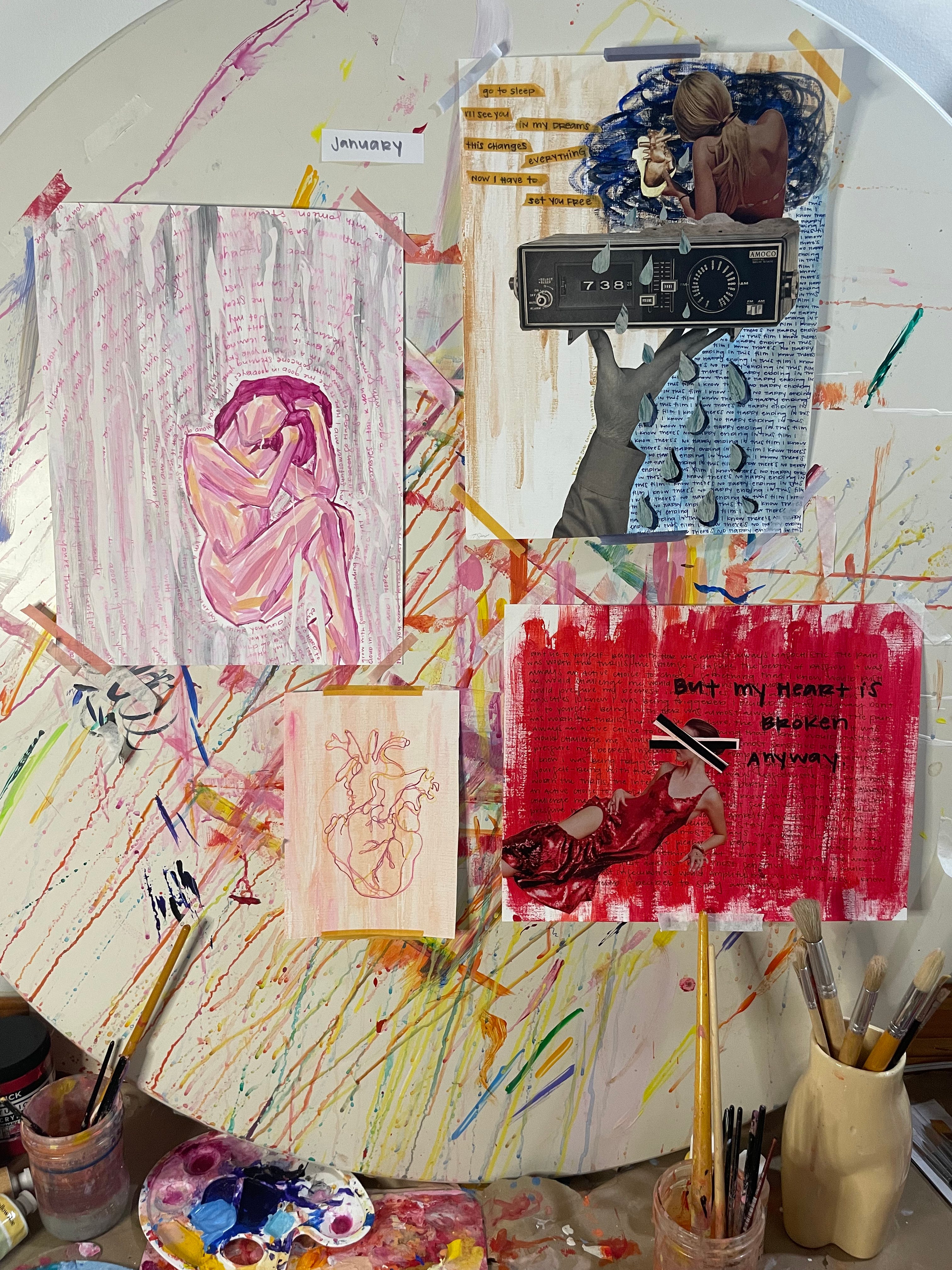
The next weeks were some of the darkest of my life. I could barely eat. I couldn’t sleep without waking up in cold sweats, my body remembering the rupture before my mind caught up. Panic attacks hit me daily, my chest tightening until I couldn’t breathe, gasping for air on subway platforms or between Zoom meetings. I was ashamed. Not just heartbroken, but humiliated. I had proclaimed this love to everyone — my family, my friends, my coworkers. And now I had to face the world knowing I’d been made a fool. I spent entire days in bed, sobbing until my eyes were swollen shut, my body wracked with a grief so physical it felt like dying.
But as I processed my anger and despair, I knew then more than ever that I was the only person who could get me through. I didn’t want to let this break me. I wanted to let it remake me.
And so, I faced it directly. At first, I survived in the most basic ways: eat three meals a day, drink water and no alcohol, get eight hours of sleep. Non-negotiables. I wrote, I made art, I let myself sob. I told myself the truth: even if I wanted to lean into a new person to distract myself, no one else could repair this for me. I had to carry myself through, and that intention was going to make all the difference.
And late at night when the images wouldn’t stop — her body with someone else’s, wrapped together as I lay alone — I found a way to fully hold myself and find comfort on my own.
I closed my eyes and pictured a future version of myself: healed, grounded, alive again. I imagined her laying with me in bed, cradling me, whispering: You’re going to get through this. I promise. One day this will just be another story you tell.
Then I imagined myself holding a younger, broken version of me, crying over pain she thought she’d never survive — sending love backward through time to every version of myself who had ever felt abandoned, who I now knew with confidence would one day feel happy again.
In those moments, I felt love loop through time: future me taking care of broken me, broken me taking care of past me. It didn’t erase the pain, but it gave me a lifeline. And to this day, this ritual has become my most reliable source of hope: knowing that the me who has already survived this is holding space for the me who’s still breaking.
That heartbreak taught me something no safe relationship ever could: I was stronger than I thought. I could survive the thing I thought would destroy me.
And once you’ve lived through your worst fear in a relationship, you walk differently. You stop making choices from fear of rejection. You understand that even if everything shatters, you will still be here. You will still be able to pick up the pieces and make something new and beautiful from the rubble.
Getting cheated on didn’t ruin me. It returned me to myself. It showed me that even when someone else breaks every promise, I can still keep the most important one: to never abandon me. Now, when life cracks me open, I don’t see it as the end. I remember that girl crying alone in her bed, and the woman she became. If I could survive that, I can survive anything.
Eight months later, once I was long returned to my full, shining form, she called to apologize — to tell me she never meant to hurt me, to reaffirm how amazing I am, to take responsibility for her actions and to pour out all the regret she carried. I let her say it for her own healing. But when it was my turn to speak, all I needed to say was: I know. I didn’t need her words to close the wound. I had already healed myself.
And maybe that’s the point of heartbreak. It isn’t just a loss. It’s proof of our capacity to expand, to risk again, to love harder. Every ending carries the possibility of becoming a beginning — if we dare to stay with ourselves through the breaking.